
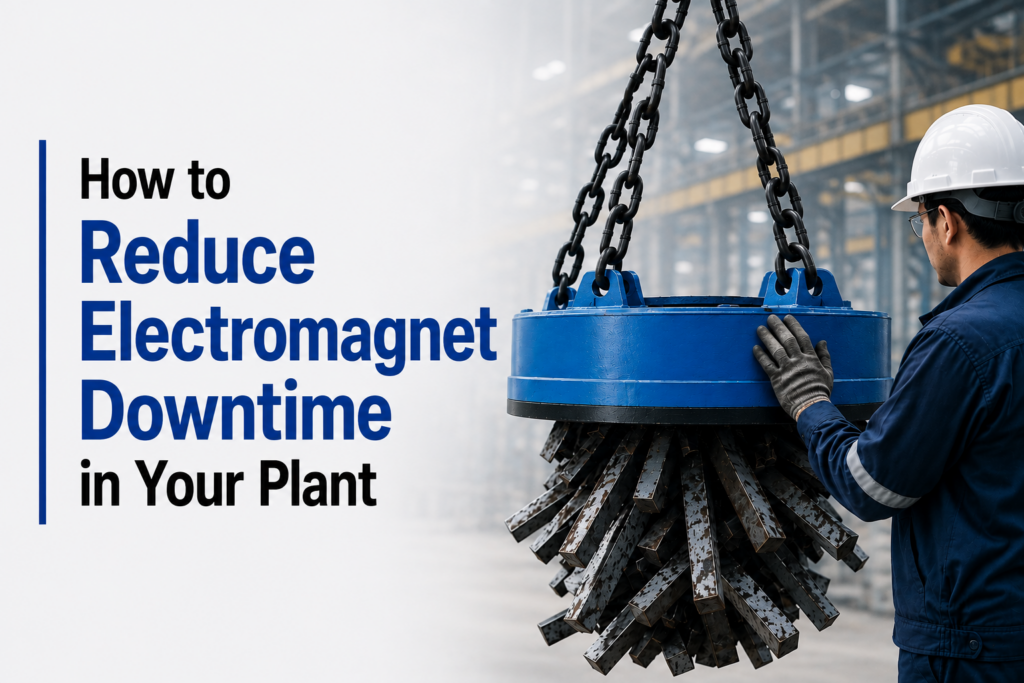
For any plant that depends on lifting magnets, steel mills, scrap yards, foundries, cement facilities — downtime is not just an inconvenience. It is a direct cost. Every hour a magnet is down is an hour the line isn’t running, labour is standing idle, and output is falling short.
The frustrating reality is that most electromagnet downtime is avoidable. Not all of it — equipment does fail. But a significant portion of unplanned stoppages that plant teams deal with every year come from issues that were building for weeks or months before the final breakdown.
Here is a practical guide to reducing that downtime.
Know the Difference Between Planned and Unplanned Downtime
Not all downtime is equal. Planned downtime — a scheduled service visit, a maintenance window, a controlled shutdown — is something you can prepare for. You can arrange backup equipment, adjust production schedules, and absorb the impact without crisis.
Unplanned downtime is the one that costs you most. It happens without warning, usually at the worst possible time, and forces everything into reactive mode — emergency calls, rushed logistics, premium service rates, and a line that sits idle while it all gets sorted.
The goal of a good maintenance approach is simple: convert as much downtime as possible from unplanned to planned. That shift alone dramatically reduces the operational and financial impact of keeping equipment serviced.
Build a Simple Annual Service Schedule
The most effective thing a plant team can do to reduce electromagnet downtime is commit to annual servicing — and actually stick to it.
Annual servicing doesn’t need to be complicated. It covers the key inspection points: coil and insulation condition, terminal and connection integrity, housing and structural wear, and a load test to verify the magnet is still performing at its rated capacity.
Done once a year, this catches the issues that cause breakdowns before they cause breakdowns. The service cost is almost always a fraction of what an emergency repair and its associated downtime costs.
Act on Warning Signs Early
Electromagnets give you signals before they fail. Reduced lifting capacity. Running hotter than usual. Inconsistent performance across shifts. Unusual noise during operation.
These are not quirks to work around. They are early warnings that something needs attention. Acting on them promptly — with a proper diagnostic assessment rather than a temporary workaround — is one of the most reliable ways to prevent a full breakdown.
The longer a warning sign is ignored, the more the underlying issue compounds. What starts as minor coil degradation becomes a complete coil failure. What starts as a loose terminal connection becomes an electrical fault that damages other components. Early intervention is always cheaper and faster than late intervention.
Keep a Service History
One of the most underused tools in maintenance management is a simple service history for each piece of equipment. Knowing when a magnet was last serviced, what was found, what was done, and what its tested performance was gives you a clear picture of how the equipment is trending over time.
Patterns become visible. A magnet that’s needed attention three times in two years is telling you something different from one that’s been trouble-free for a decade. A service history helps you make smarter decisions about when to repair, when to refurbish, and when to replace.
Have a Backup Plan for Critical Equipment
For lifting magnets that are central to your production process, having a backup plan is worth serious consideration. This doesn’t necessarily mean owning a second magnet outright — rental options make it practical to have a certified, ready-to-deploy unit available quickly if a critical magnet goes down unexpectedly.
Knowing that a replacement can be on-site within 24 to 72 hours changes the calculus of an unexpected breakdown significantly. It turns a potential multi-day stoppage into a manageable disruption.
Work With a Service Partner, Not Just a Repair Shop
There is a meaningful difference between a repair shop that fixes your magnet when it breaks and a service partner that helps you keep it running. The first is reactive by nature. The second is proactive — familiar with your equipment, available when you need them, and invested in keeping your operation running efficiently.
A good service partner provides clear turnaround times, detailed service reports, load-tested certification on completed work, and a warranty that actually means something. They will also tell you honestly when repair makes sense and when it doesn’t — rather than recommending a fix that buys you three months before the same problem comes back.
The Bottom Line
Reducing electromagnet downtime comes down to three things done consistently: planned annual servicing, early action on warning signs, and working with a service partner who understands your equipment and your operation.
None of this is complicated. But it requires treating maintenance as a priority rather than an afterthought — and the plants that do consistently experience fewer stoppages, lower repair costs, and more predictable operations year on year.
The gap between what your equipment delivers and what it should deliver is closer to closing than you think. Start with a load test. Start with a conversation. Start at refluxmagnets.com