
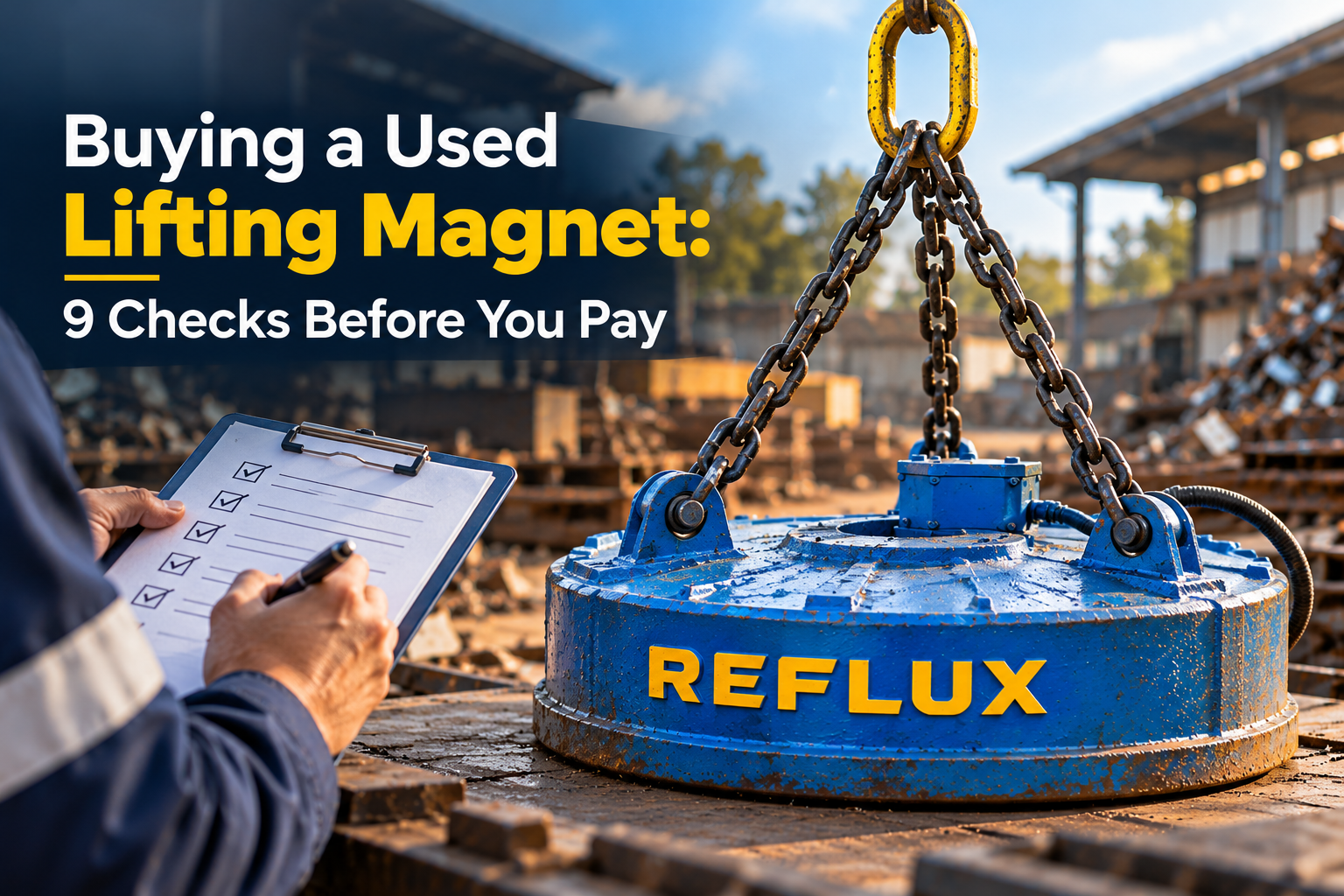
A used lifting magnet can be a genuinely good buy; a properly refurbished unit often costs meaningfully less than new while delivering close to original performance. It can also be a expensive gamble if the seller hasn’t been straight about its condition. The difference between the two outcomes comes down to nine checks that take an hour to run and can save you months of downtime and a re-purchase down the line.
1. Insulation resistance readings
This is the single most important electrical check on a used magnet. Insulation resistance testing (megger testing) reveals whether the coil winding insulation has degraded from heat, moisture, or age; a low reading is often the first sign of a coil nearing failure, even if the magnet still “works” today. Ask for a recent test result, in writing, not a verbal assurance that it “passed.”
2. Coil condition
Ask directly whether the coil has been rewound, and if so, when and by whom. A magnet on its original coil with high hours has different risk than one recently rewound to OEM-grade standard. Discoloration, visible damage, or an unusually recent rewind with no documentation are all worth questioning further.
3. Load-test certification
A used magnet should come with a current load test certificate confirming it holds its rated capacity safely. If the seller can’t produce one, ask why, and don’t accept “it lifted fine when we used it,” as a substitute for a documented, certified test.
4. Manufacture year and service history
Age alone doesn’t disqualify a magnet, but it should inform your price and your expectations. Ask for the manufacture year and, ideally, a complete service history that details:
- Previous repairs
- Coil rewinds
- Replaced components
A well-maintained older unit can outperform a neglected newer one.
5. Controller compatibility
The magnet is only half the system. Confirm the controller being sold with it (or your existing controller) is actually compatible; specifically, the voltage, current rating, and control logic all need to match. A mismatched controller can undermine performance or damage the coil over time.
6. Physical condition of the frame and casing
Inspect for cracks, weld repairs, corrosion, or impact damage to the frame. Structural damage affects both safety and the magnet’s ability to maintain proper air gap and contact with the load.
7. Terminal and junction box condition
Check terminals and the junction box for corrosion, loose connections, or signs of previous overheating (discoloration, melted insulation). These are common failure points and relatively cheap to fix, but only if you know about them before you pay, not after.
8. Cable condition
Lifting magnet cables take constant flexing and abrasion. Look for cracked outer sheathing, exposed conductors, or previous splice repairs. A magnet in otherwise good condition with a worn cable is a straightforward fix; just make sure it’s priced accordingly.
9. Spares availability
Before buying, confirm that spare parts (coils, cables, terminals) are actually available for that model, especially if it’s an older or less common design. A great deal on a magnet you can’t get parts for later is not actually a good deal.
What a legitimate refurbisher should hand over, in writing
When buying from a dealer or refurbisher rather than a private seller, expect to receive, as standard, not on request:
- A load test certificate with date and rated capacity
- Insulation resistance test results
- A summary of any rewind, repair, or refurbishment work performed
- Manufacture year and, where available, prior service history
- A warranty period covering the refurbishment work
If a seller is reluctant to provide any of these, treat that reluctance as your answer.
Frequently Asked Questions
Is buying a used lifting magnet safe?
It can be, provided you verify insulation resistance, load-test certification, and coil condition before purchase. The risk isn’t in buying used; it’s in buying without documentation.
What’s the difference between a used and a refurbished lifting magnet?
“Used” simply means previously owned, with no guarantee of condition. “Refurbished” or “reconditioned” should mean the unit has been inspected, repaired as needed, and load-tested to a certified standard; always demand proof of what you’re actually being offered.
Should a used lifting magnet come with a warranty?
A legitimate refurbisher will typically offer a warranty on the refurbishment work performed. A private sale with no refurbishment history is unlikely to include one, which should be reflected in the price.
How do I know if a used magnet’s coil is in good condition?
Ask for recent insulation resistance test results and rewind history. Visible discoloration or an unexplained recent rewind with no documentation are both reasons to ask more questions before buying.
Why does spares availability matter when buying used?
A used magnet with no available replacement parts becomes a liability the first time it needs a repair. Confirm parts availability for the specific model before you commit.