
How to Reduce Electromagnet Downtime in Your Plant
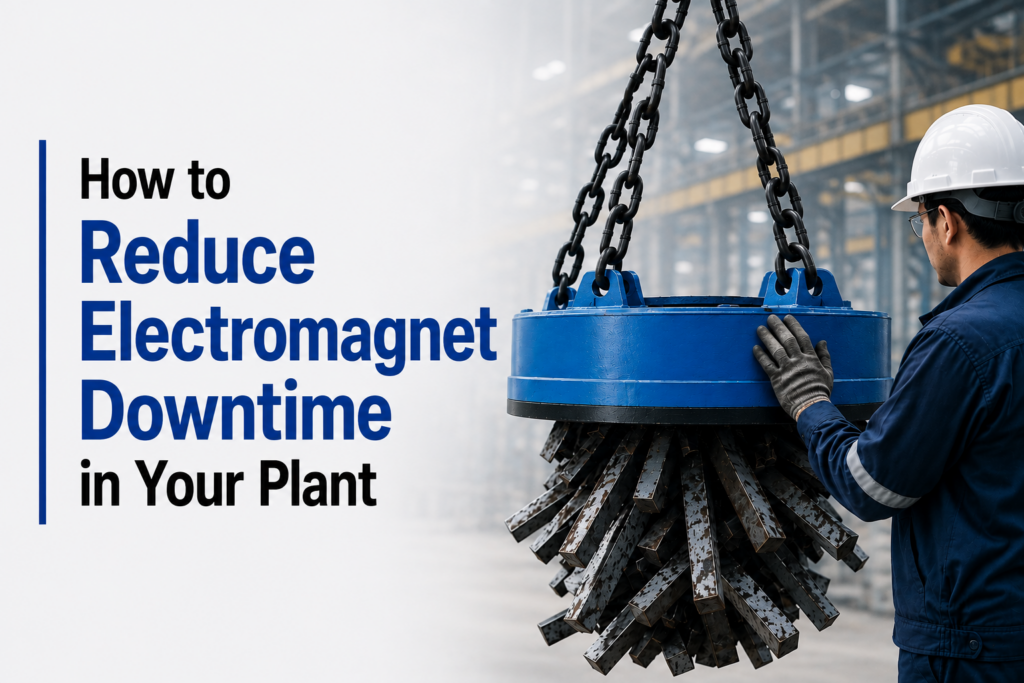
For any plant that depends on lifting magnets, steel mills, scrap yards, foundries, cement facilities — downtime is not just an inconvenience. It is a direct cost. Every hour a magnet is down is an hour the line isn’t running, labour is standing idle, and output is falling short. The frustrating reality is that most electromagnet downtime is avoidable. Not all of it — equipment does fail. But a significant portion of unplanned stoppages that plant teams deal with every year come from issues that were building for weeks or months before the final breakdown. Here is a practical guide to reducing that downtime. Know the Difference Between Planned and Unplanned Downtime Not all downtime is equal. Planned downtime — a scheduled service visit, a maintenance window, a controlled shutdown — is something you can prepare for. You can arrange backup equipment, adjust production schedules, and absorb the impact without crisis. Unplanned downtime is the one that costs you most. It happens without warning, usually at the worst possible time, and forces everything into reactive mode — emergency calls, rushed logistics, premium service rates, and a line that sits idle while it all gets sorted. The goal of a good maintenance approach is simple: convert as much downtime as possible from unplanned to planned. That shift alone dramatically reduces the operational and financial impact of keeping equipment serviced. Build a Simple Annual Service Schedule The most effective thing a plant team can do to reduce electromagnet downtime is commit to annual servicing — and actually stick to it. Annual servicing doesn’t need to be complicated. It covers the key inspection points: coil and insulation condition, terminal and connection integrity, housing and structural wear, and a load test to verify the magnet is still performing at its rated capacity. Done once a year, this catches the issues that cause breakdowns before they cause breakdowns. The service cost is almost always a fraction of what an emergency repair and its associated downtime costs. Act on Warning Signs Early Electromagnets give you signals before they fail. Reduced lifting capacity. Running hotter than usual. Inconsistent performance across shifts. Unusual noise during operation. These are not quirks to work around. They are early warnings that something needs attention. Acting on them promptly — with a proper diagnostic assessment rather than a temporary workaround — is one of the most reliable ways to prevent a full breakdown. The longer a warning sign is ignored, the more the underlying issue compounds. What starts as minor coil degradation becomes a complete coil failure. What starts as a loose terminal connection becomes an electrical fault that damages other components. Early intervention is always cheaper and faster than late intervention. Keep a Service History One of the most underused tools in maintenance management is a simple service history for each piece of equipment. Knowing when a magnet was last serviced, what was found, what was done, and what its tested performance was gives you a clear picture of how the equipment is trending over time. Patterns become visible. A magnet that’s needed attention three times in two years is telling you something different from one that’s been trouble-free for a decade. A service history helps you make smarter decisions about when to repair, when to refurbish, and when to replace. Have a Backup Plan for Critical Equipment For lifting magnets that are central to your production process, having a backup plan is worth serious consideration. This doesn’t necessarily mean owning a second magnet outright — rental options make it practical to have a certified, ready-to-deploy unit available quickly if a critical magnet goes down unexpectedly. Knowing that a replacement can be on-site within 24 to 72 hours changes the calculus of an unexpected breakdown significantly. It turns a potential multi-day stoppage into a manageable disruption. Work With a Service Partner, Not Just a Repair Shop There is a meaningful difference between a repair shop that fixes your magnet when it breaks and a service partner that helps you keep it running. The first is reactive by nature. The second is proactive — familiar with your equipment, available when you need them, and invested in keeping your operation running efficiently. A good service partner provides clear turnaround times, detailed service reports, load-tested certification on completed work, and a warranty that actually means something. They will also tell you honestly when repair makes sense and when it doesn’t — rather than recommending a fix that buys you three months before the same problem comes back. The Bottom Line Reducing electromagnet downtime comes down to three things done consistently: planned annual servicing, early action on warning signs, and working with a service partner who understands your equipment and your operation. None of this is complicated. But it requires treating maintenance as a priority rather than an afterthought — and the plants that do consistently experience fewer stoppages, lower repair costs, and more predictable operations year on year. The gap between what your equipment delivers and what it should deliver is closer to closing than you think. Start with a load test. Start with a conversation. Start at refluxmagnets.com
How India’s Heavy Industry Can Get More From Its Lifting Equipment
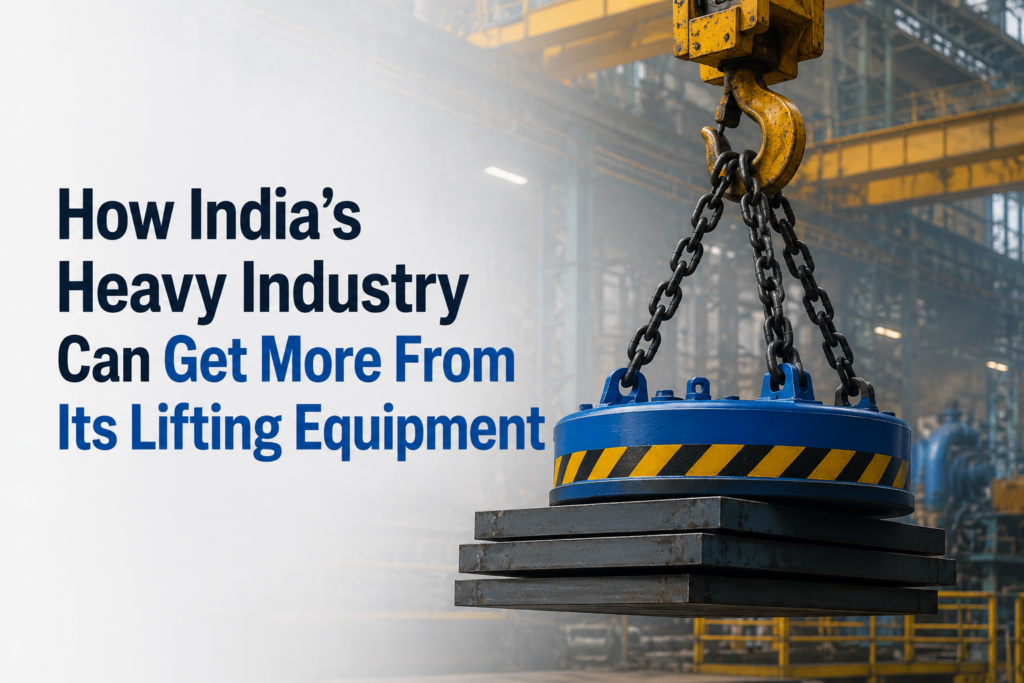
India’s heavy industry is growing faster than at any point in the last two decades. Steel production is scaling. Scrap processing volumes are rising. Infrastructure projects are multiplying. And at the centre of all of it — keeping materials moving, lines running, and operations productive, is lifting equipment. But here’s what most plant teams don’t talk about: the gap between what their lifting equipment is capable of and what they’re actually getting out of it is often significant. The good news is that closing that gap doesn’t require new equipment or major investment. It requires a different approach to how existing equipment is managed. Understand What Your Equipment Is Actually Capable Of Most industrial electromagnets are rated for a specific lifting capacity in kilonewtons. In practice, many operate well below that rating — due to coil degradation, insulation wear, or calibration drift that builds up quietly over time. The first step to getting more from your lifting equipment is knowing what it’s actually delivering versus what it should be delivering. A load test gives you that answer clearly and quickly. If there’s a gap, it can almost always be closed through servicing rather than replacement. Stop Treating Maintenance as a Reaction The single biggest productivity drain in heavy industry isn’t equipment failure — it’s unplanned downtime caused by equipment failure that was preventable. When a lifting magnet goes down unexpectedly, everything stops. The line. The labour. The output. And the cost isn’t just the repair — it’s every hour the plant isn’t producing while the problem gets sorted. Plants that schedule annual servicing, act on early warning signs, and treat maintenance as a planned cost rather than an emergency response consistently run with fewer stoppages and lower overall maintenance spend. It’s not a complicated shift — it’s a deliberate one. Match the Equipment to the Job Not every electromagnet is suited to every application. A circular lifting magnet designed for scrap handling behaves very differently from a rectangular magnet built for slab and billet lifting. Using the wrong type for your application means working harder for worse results. The same applies to magnetic separators. The right separator for a high-volume dry material process looks very different from what’s needed for a liquid or slurry application. Getting this match right — ideally with guidance from a specialist who understands both the equipment and the application — directly improves throughput and reduces wear on the magnet itself. Extend Equipment Life Through Smarter Operation Two operating habits destroy electromagnet life faster than anything else: exceeding the rated duty cycle and ignoring overheating. Duty cycle refers to the ratio of on-time to off-time during operation. Exceeding it causes the coil to build up heat faster than it can dissipate — breaking down insulation, degrading the coil, and shortening the magnet’s operational life significantly. Keeping an eye on operating temperatures, respecting duty cycle limits, and ensuring the magnet is being used within its rated capacity are simple habits that add years to equipment life and reduce the frequency of major repairs. Consider the Full Lifecycle — Not Just the Purchase Heavy industry teams often evaluate lifting equipment purely on purchase price. The smarter measure is total cost of ownership — what the equipment costs to run, maintain, and eventually replace over its full operational life. A well-maintained electromagnet, serviced annually and operated correctly, can deliver reliable performance for well over a decade. One that’s run hard, serviced reactively, and pushed beyond its rated limits will cost significantly more in repairs, replacements, and lost production over the same period. Building lifecycle thinking into procurement and maintenance decisions — considering repair, refurbishment, and rental options alongside outright purchase — consistently delivers better outcomes financially and operationally. The Bottom Line Getting more from lifting equipment isn’t about spending more. It’s about operating smarter — knowing what your equipment is actually delivering, maintaining it on a planned schedule, matching it correctly to your application, and thinking about its full lifecycle rather than just its upfront cost. India’s heavy industry has an opportunity to significantly improve productivity and reduce operational costs simply by changing how it manages the equipment it already has. The plants that figure this out first will have a meaningful and lasting advantage. Reflux Magnets provides certified electromagnet servicing, coil rewinding, rental, and lifecycle management for heavy industries across India. Every job is load-tested, documented, and backed by up to 12 months warranty with pan-India on-site and pickup support. Visit refluxmagnets.com or reach out via WhatsApp to discuss your equipment requirements.
Why Preventive Maintenance Beats Emergency Repair Every Time
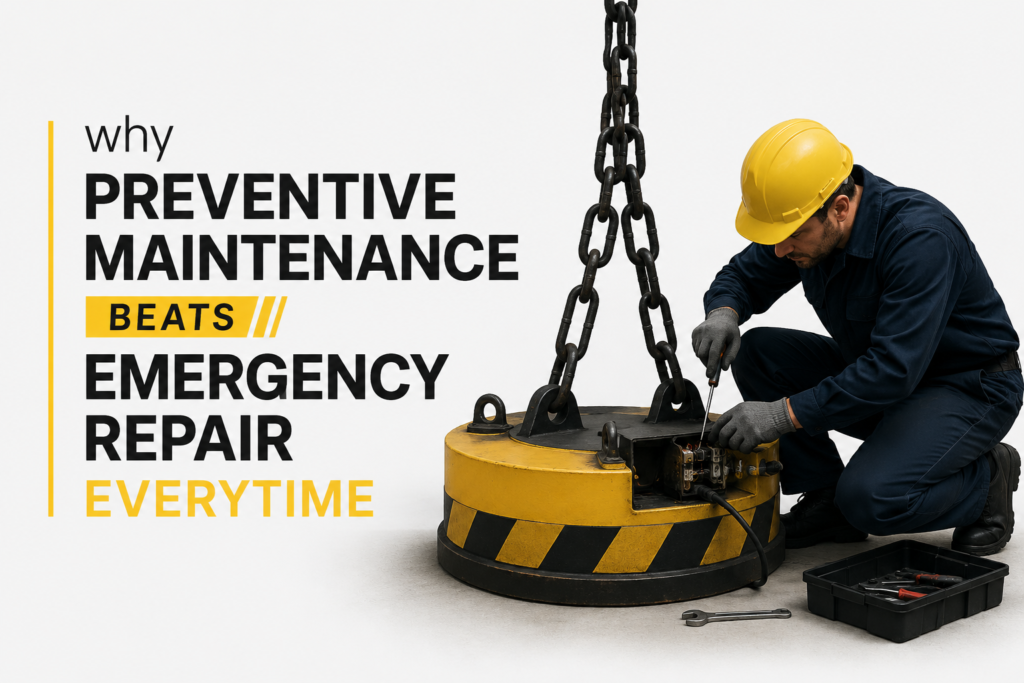
There are two ways to manage industrial electromagnets. One is reactive: wait until something breaks, then scramble to fix it. The other is preventive: service equipment on a planned schedule, catch problems early, and avoid the breakdown altogether. Most Indian industrial operations still default to the first approach, not because it’s better, but because it’s familiar. The data, the costs, and the operational outcomes all point firmly toward the second. The True Cost of Emergency Repair When a magnet fails unexpectedly, the cost is never just the repair bill. It includes the production line that stops, the labour standing idle, the rushed logistics to get a technician on-site, and often, a more extensive repair than would have been needed if the issue had been caught earlier. Emergency repairs also come with less predictability. You don’t get to choose when the failure happens, it often occurs during peak production, at the worst possible time, with the least amount of buffer to absorb the disruption. Preventive Maintenance Catches Problems While They’re Still Cheap to Fix Nearly every major electromagnet failure starts as a minor issue. Slight coil degradation. A small drop in lifting capacity. A terminal connection that’s just beginning to loosen. Caught early, these are quick, low-cost fixes. Left unaddressed, the same issues compound. Coil degradation accelerates. Capacity drops further. Loose connections create electrical faults that damage other components. What started as a minor service item becomes a full coil rewind, a housing repair, or in severe cases, equipment that needs replacement entirely. Planned Downtime vs. Unplanned Downtime This is one of the most underrated advantages of preventive maintenance: you control when it happens. A scheduled service visit can be planned around your production calendar — during a lower-demand period, alongside other maintenance work, with backup equipment arranged in advance if needed. An emergency breakdown gives you none of that. It happens when it happens, and your operation absorbs the full impact. The Compounding Value of Consistent Servicing Preventive maintenance isn’t a single event — its value compounds over time. A magnet serviced annually maintains its rated lifting capacity for far longer than one that’s only addressed when something goes wrong. Insulation lasts longer. Coil life extends. The equipment simply performs better, for longer, across its entire operational lifespan. This translates directly into a lower total cost of ownership. The capital you spent on the equipment continues delivering value for years longer than it would under a reactive maintenance approach. What a Preventive Maintenance Schedule Typically Looks Like None of this needs to be complicated or time-consuming. A well-run preventive maintenance programme is typically far less disruptive than even a single emergency repair. Making the Shift from Reactive to Preventive For plants that have always operated reactively, shifting to a preventive model doesn’t require an overhaul of how things are done. It starts with a baseline assessment of your current equipment, followed by a simple annual servicing schedule built around your operational calendar. From there, it’s a matter of consistency, sticking to the schedule, acting on findings, and treating maintenance as a planned operational cost rather than an unplanned crisis. The Bottom Line Emergency repair will always cost more than preventive maintenance, in money, in downtime, and in operational disruption. The plants that consistently run with the fewest breakdowns are not the ones with the newest equipment. They’re the ones that service what they have, on a schedule, before something forces them to. If your current approach to electromagnet maintenance is “fix it when it breaks,” the most valuable change you can make this year isn’t a new piece of equipment. It’s a maintenance schedule. Visit refluxmagnets.com or reach out via WhatsApp to set up a preventive maintenance schedule for your plant.